Credit Card Holders Are Using ‘Friendly Fraud’ to Get Back at Retailers | Amanda Mull
- [!] +friendly fraud +wotd: Credit Card Holders Are Using ‘Friendly Fraud’ to Get Back at Retailers | Amanda Mull •stoweboyd.io
- People are fraudulently gaming the online buying system to eke out cash by claiming issues with legitimate transactions.
- 'Greenwood says the complexity of online payments, in which a purchase can bounce through different platforms and vendors and processors until the merchant that appears on your card statement has no discernible connection to the party you thought you were transacting with, causes yet more “friendly fraud,” which includes disputes mistakenly filed to recover the funds for legitimate transactions.'
- Avarice or naiveté isn’t the only accelerant involved in the chargeback boom. “One thing in the last two to three years has been that the cost of living in most developed markets has put quite a significant squeeze on consumers, particularly younger consumers on lower income,” Greenwood says. And as Mortensen points out, research has found a historical link between low consumer sentiment and an attendant rise in acquisitive property crime in the US. When people feel the economic conditions deteriorating around them, they tend to steal more, and perception of the US economy has recently been near all-time lows.== Americans, too, have become more likely in recent years to view corporations as rapacious and overly powerful. Retailers that railroad shoppers into accepting things such as tougher return policies, surprise fees and easier impulse purchasing aren’t doing a great deal to help the cause. Taken together it’s fertile ground for a type of fraud with a lot of unsympathetic victims, which you can maybe talk yourself into believing isn’t fraud at all.''
body
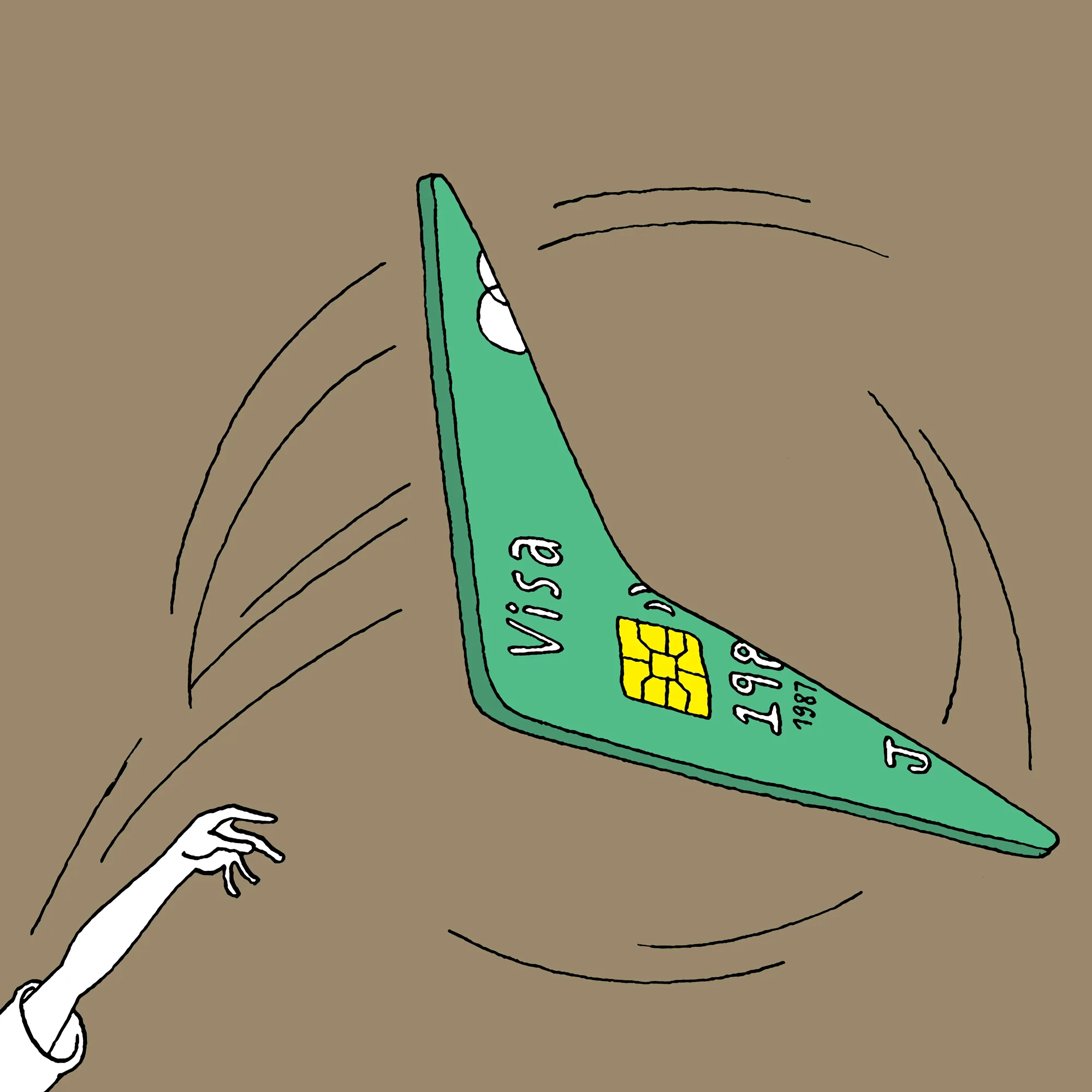
Illustration: Baptiste Virot for Bloomberg Businessweek
The internet is teeming with novel opportunities to get ripped off. Scams and flimflams have always been part of the consumer economy, but now they seem to be lurking everywhere. Between AI-generated product images, the spread of convincing-looking counterfeits of everyday goods and social platforms governed by recommendation algorithms that can be gamed by bad actors, picking off unsuspecting shoppers has never been easier.
Perhaps even more common than scams, though, are consumer interactions that, though legal, feel scammy: sneaky subscription charges for services you have no memory of signing up for. Line items on your credit card statement from merchants you don’t recognize. A few bucks in inscrutable fees tucked into the fine print of a receipt. Return policies that have quietly become tighter and more punitive. Products that arrive in the mail and seem a lot smaller, shoddier or otherwise worse than what you thought you were buying. Packages that never manage to arrive at all, even though they’ve been marked as delivered.
As more parts of life begin to stink of scamminess, more shoppers than ever are wielding a staid old tool of consumer protection like a weapon. Chargebacks — petitioning your bank to reverse a credit or debit card transaction — have long been a last-resort method of recovering funds for victims of theft or fraud. Now, for some consumers, they’re a first line of defense, and the number of people using them has risen precipitously over the past five years. According to Juniper Research, American consumers filed 158 million transaction disputes in 2025, an increase of 29% from 2021, significantly outpacing general growth in card transactions. Worldwide, thanks to a pandemic-induced wave of greater card usage in countries that had long stuck to cash for everyday spending, the spike has been even sharper, with 46% more disputes in the same period. The volume of disputes has become so cumbersome that more retailers are farming out the whole process of investigating and defending against fraud claims to third-party vendors that specialize in helping them hold on to more of consumers’ money.
Some of this growth in reported fraud is indeed a reflection of growth in real fraud. More people are getting scammed, especially online. But according to Michael Greenwood, a senior research analyst at Juniper who focuses on digital payments, that’s not the main source of dispute rates. Instead he points to two other phenomena responsible for the ballooning number of chargebacks: growing confusion among consumers over how the transactions on their monthly statements correspond to their actual purchases, as well as an increasing willingness, especially among younger shoppers, to engage in a little bit of fraud of their own.
Transaction disputes have traditionally been used to address certain types of crimes committed against consumers. If someone steals your wallet and goes on a shopping spree, or if you put a deposit on a wedding venue that goes out of business before the big day, you can complain to your credit card issuer, which investigates and reverses the charge if it finds you’re telling the truth. The issuer then claws the funds back from the offending merchant’s bank, on top of a chargeback penalty fee — an expensive, onerous process that, at least in theory, incentivizes merchants to be honest transactors and resolve issues with customers before chargebacks are filed. If a merchant proves to be a repeat offender, it might get bounced from its standard payments vendor and land in the sometimes shady world of high-risk processors, where vendors charge transaction fees several times higher than their mainstream peers and often require merchants to keep large cash balances in escrow to satisfy any future issues.
The growth of e-commerce has complicated this neat system of incentives on a few levels. In general, disputes have always been more common for what the payments industry calls “card not present” transactions, in which a purchase is made remotely instead of by a person handing over a physical card in a store. In the analog, pre-internet consumer world, these kinds of transactions were relatively rare, but now they represent all of online shopping, as well as things that feel more terrestrial, such as ordering DoorDash and taking an Uber. Because stolen card information can be used for these transactions even if a thief didn’t manage to steal the card itself, the barrier for fraud — and therefore legitimate disputes — is lower.
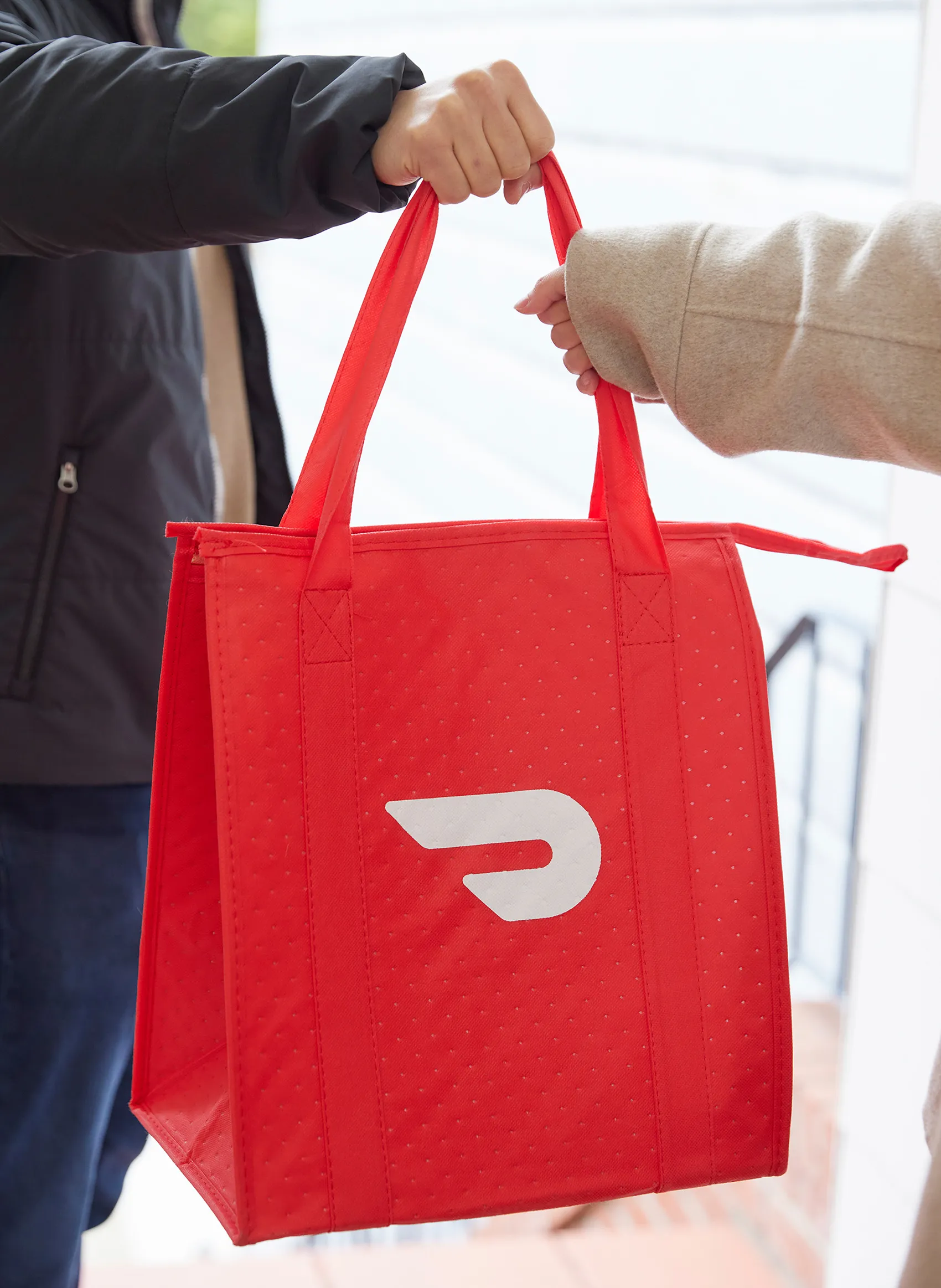
A delivery with DoorDash. Photographer: Emily Dulla/Getty Images
So is the barrier for confusion. The more transactions we conduct online, the more things we erroneously report as fraud at the end of the month. Online commerce abstracts the purchasing process and weakens the connection between payments and products; exposing people to a near-limitless array of retail options, putting three days between when they buy stuff and when it shows up, and then making them try to remember what all those purchases were several weeks later result in a high rate of genuine oopsie-daisies. On top of that, Greenwood says the complexity of online payments, in which a purchase can bounce through different platforms and vendors and processors until the merchant that appears on your card statement has no discernible connection to the party you thought you were transacting with, causes yet more “friendly fraud,” which includes disputes mistakenly filed to recover the funds for legitimate transactions. Digital commerce can also make these kinds of mix-ups more common in other ways — say, if you let your teenager save your card to their Apple Pay and they treat themselves to a video game download or some new shoes you didn’t know about.
Subscription charges also account for a growing number of chargebacks. As more brands and retailers have tried to find ways to bake a little bit of recurring revenue into what used to be one-time purchases of things like alarm clocks and coffee makers, more consumers end up unwittingly agreeing to monthly transactions that look abusive once they notice them. Those subscription fees may not be fraudulent in a legal sense, but enough consumers feel as though they’re being tricked, misled or otherwise hoodwinked by merchants that they’re reporting them directly to the bank instead of trying to resolve the issue with the merchant first. After all, if a retailer didn’t make it absolutely clear you were signing up for a subscription, what are the odds they’ll make it easy to cancel and request a refund?
Then there’s the issue of subjectivity — what, exactly, counts as a product or service delivered as described? “If you buy a lightbulb, it either turns on or it doesn’t,” Greenwood says. “If you buy food, maybe you think the food wasn’t cooked properly.” The kinds of merchants that inspire a lot of angry reviews online — airlines, hotels, restaurants, salons — tend to also inspire a lot of chargebacks. Not coincidentally, these tend to be the kinds of chargebacks that consumers don’t win quite so often. (And even if they do, it can come at a cost that the filer may not have anticipated — airlines, hotels and other businesses that verify a customer’s identity on every transaction frequently ban those they believe to have filed fishy fraud claims.)
At this point, honest mistakes among buyers begin to bleed into something a little bit less mistaken. On TikTok, which has in recent years seen its young user base invent several classic types of fraud from first principles, it’s not hard to find tutorials on how to use chargebacks to get free stuff, circumvent “final sale” purchases or speed up refunds if a merchant is taking too long to process a return. “There’s people that feel like, oh, this is just sticking it to the man, so to speak. It’s not really, like, fraud,” says , a strategic adviser in the fraud and anti-money-laundering practice at the research firm Datos Insights, which has also found a striking rise in chargebacks driven by consumers disputing legitimate transactions. Both he and Greenwood say this kind of content, which often notes that disputes of relatively low-value transactions are often approved automatically because it would be too expensive to investigate them, is a significant source of “first-person fraud” — the industry term for disputing a transaction you know to be legitimate.
Some financially naive consumers appear not to realize that what they’re doing is technically a crime, or even that it’s meaningfully different from making a return and getting a refund the old-fashioned way. For merchants, the outcomes are much different. Large retailers fold the cost of lost revenue, lost product, and lost labor that fraudulent chargebacks create into the prices everyone pays, but for small merchants those losses quickly become an existential threat to their ability to continue operating.
Avarice or naiveté isn’t the only accelerant involved in the chargeback boom. “One thing in the last two to three years has been that the cost of living in most developed markets has put quite a significant squeeze on consumers, particularly younger consumers on lower income,” Greenwood says. And as Mortensen points out, research has found a historical link between low consumer sentiment and an attendant rise in acquisitive property crime in the US. When people feel the economic conditions deteriorating around them, they tend to steal more, and perception of the US economy has recently been near all-time lows. Americans, too, have become more likely in recent years to view corporations as rapacious and overly powerful. Retailers that railroad shoppers into accepting things such as tougher return policies, surprise fees and easier impulse purchasing aren’t doing a great deal to help the cause. Taken together it’s fertile ground for a type of fraud with a lot of unsympathetic victims, which you can maybe talk yourself into believing isn’t fraud at all.